



Bohuslav Martinu Bronze Head
He was one of the most prolific Czech composers of the 20th century. His work incorporates French and Czech influences and is known for his unique style and technique. He began to study violin at the age of 7 and studied at the Prague Conservatory of Music. Later, he was expelled and began to study on his own. During the First World War, he lived in the countryside and began to compose music. In 1923, he went to Paris for further studies, where he lived until the 1940 invasion of France by Nazi Germany, after which he went into exile in the United States. In the United States, Martinu became a star composer and taught at Princeton University and many other universities. His music is known for its energy, charm and originality.

Zeus head stone carving
It is the king of the gods in ancient Greek mythology and the head of the twelve gods of Olympus. The god of the sky and thunder and lightning, with thunderbolt as a weapon, maintains the order between heaven and earth. He is the son of the second generation god king Cronus of the Titan clan, whose mother is Ria. To avoid the fate of being devoured by Cronus, he was hidden by his mother and raised in Crete or by the Goddess Nimve. As an adult, Zeus rescued his brothers and sisters who had been devoured by his father and fought with them against Cronus, eventually overthrowing the rule of the Titans. Known for his wisdom and strength, his reign symbolized the rise of the new theocracy and the fall of the old. play a supreme role in mythology

Elder Susanna bronze statue
This bust is located in the city park of Budapest
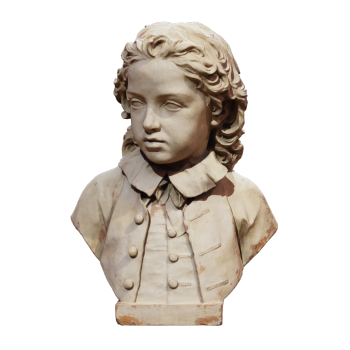
Edward Salter 6-year-old Half body Woodcarving

Half body statue of the Winter Father
The Winter Father statue is a tribute to the mythological embodiment of the cold winter and the transition of seasons. In various cultures, winter fathers are often associated with figures such as Winter Old or Jack Frost. This sculpture captures the essence of his personality, with flowing robes hinting at the cold wind, a stick symbolizing winter commands, and perhaps a hint of frost on his face. The father of winter, a symbol that transcends culture, represents the seasonal cycle and the transformative power of nature in the cold months. This statue has sparked contemplation on the inherent beauty and power of winter.

Statue of a Young Man in Limestone from the Classical II Period in Cyprus
This youth portrait sculpture was made during the Cyprus Classical II period from 600-475 BC. The statue is made of limestone and was created around 530-520 BC. The hair of the sculpture is divided into large horizontal curls, forming an arched shape at the back. The details are represented by small triangles. The facial features are very delicate, with red marks on the lips. The nose is slightly curved and the eyes are wide open. The eyebrow lines are long and thin, and the ears are depicted very delicately. There is a row of curly hair above the forehead. The statue is currently on display at the Metropolitan Museum of Art in New York, located in Hall 171.

The wooden carving "Johannes Sudder" created by Gus
Johannes Sudel woodcarving was created by an artist named Gus, who was an art sculptor from Dresden, Germany. This wooden carved figure has long flowing hair and beard, giving it an ancient or mythical appearance. His eyes were closed, and his expression was calm and peaceful. The details of the hair and beard are handled very delicately.
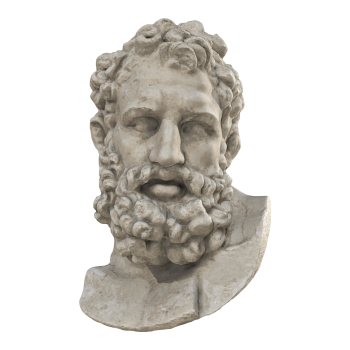
Marble statue of Hercules of FarNese at the National Archaeological Museum of Napoli, Italy
The original of the statue is bronze but has been lost, and the extant is a Roman-period marble replica, in several different sizes and versions. One of the most famous replicas is Farnessey Hercules, created in 212 by the sculptor Grikhon and now in the collection of the National Archaeological Museum of Napoli, Italy. The statue depicts Hercules, who has just completed his twelve drudgery, with a haggard face and melancholy eyes, showing his humanity and tragedy.

Ramses II Granite Head British Museum Collection
This statue depicts the 19th Dynasty Pharaoh Ramses II wearing a holy serpent crown and a Nimes turban. The statue was damaged by the time it was found, with the limbs and lower half missing. It is one of a pair of statues of Ramses originally located on the flank of the gate of the Temple of Lamesim, and the head of the other statue is still at the gate of the Temple of Lamesim. The statue was transported from Egypt to England in 1816 by the Italian explorer Giovanni Berzoni and acquired by the British Museum in 1821. It is now one of the representative artifacts of the British Museum, displayed in Hall 4.

Popular Models
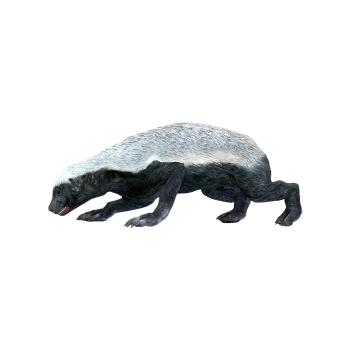
Honey Badger (3D animated model)
194 View
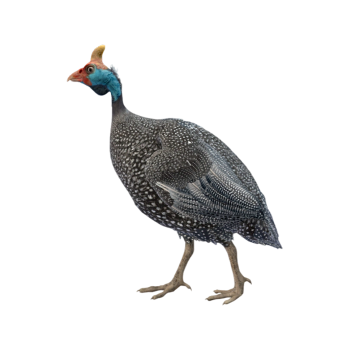
Guinea fowl (3D animated model)
165 View
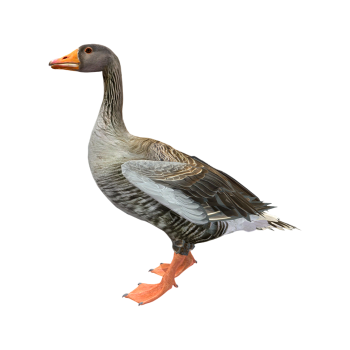
Wild Goose (3D animated model)
187 View
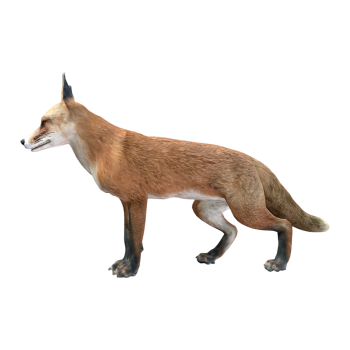
Red Fox (3D animated model)
155 View
Random Model

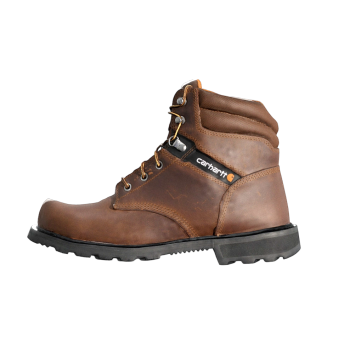
Carhart Workwear Boots
517 View

Arab Antique Aden Dagger
726 View
Ford Hoonicorn V2
477 View


Pigeon (3D animated model)
529 View
Old tire inflation pump
647 View
armchair
489 View

Sony GV-8 Video Walkman
717 View